
What Are Hericenones and Why Do They Matter?
Lion's Mane has become one of the most popular functional mushrooms in the world, largely due to its association with cognitive performance, memory, focus, and healthy brain ageing. Yet few people know the name of the compounds that first sparked scientific interest in the mushroom. Those compounds are called hericenones.
For researchers investigating the potential cognitive benefits of Lion's Mane, hericenones have become one of the most studied groups of bioactive compounds within the mushroom. They are believed to play an important role in Lion's Mane's relationship with nerve growth factor (NGF), a protein essential for the growth, maintenance, and survival of neurons.
Understanding what hericenones are and how they differ from other Lion's Mane compounds can help explain why sourcing, extraction, and manufacturing quality matter so much when choosing a mushroom supplement.
What Are Hericenones?
Hericenones are a family of naturally occurring bioactive compounds found within Lion's Mane (Hericium erinaceus). They belong to a broader group of molecules produced by the mushroom and are most commonly associated with the fruiting body, the part traditionally consumed and used in culinary and medicinal preparations.
Scientists first became interested in hericenones because laboratory studies suggested they may influence pathways associated with nerve growth factor (NGF), a signalling protein involved in the development and maintenance of neurons.
This discovery helped distinguish Lion's Mane from many other medicinal mushrooms. While mushrooms such as Reishi are often studied for immune and stress-related benefits, Lion's Mane attracted attention because of its potential role in supporting brain health and cognitive function.
Today, hericenones remain one of the key reasons Lion's Mane is studied in the fields of neuroscience, cognitive ageing, and neuroplasticity.
Why Have Hericenones Become So Important?
The reason hericenones receive so much attention is simple. They help distinguish Lion's Mane from almost every other functional mushroom. Reishi is often studied for its triterpenes. Chaga is known for compounds such as ergothioneine and polyphenols. Cordyceps is associated with adenosine and compounds involved in cellular energy metabolism.
Lion's Mane is unique because of the scientific interest surrounding hericenones, erinacines, and their potential relationship with brain health. For many researchers, these compounds are what make Lion's Mane one of the most intriguing mushrooms in modern neuroscience.
Where Are Hericenones Found?
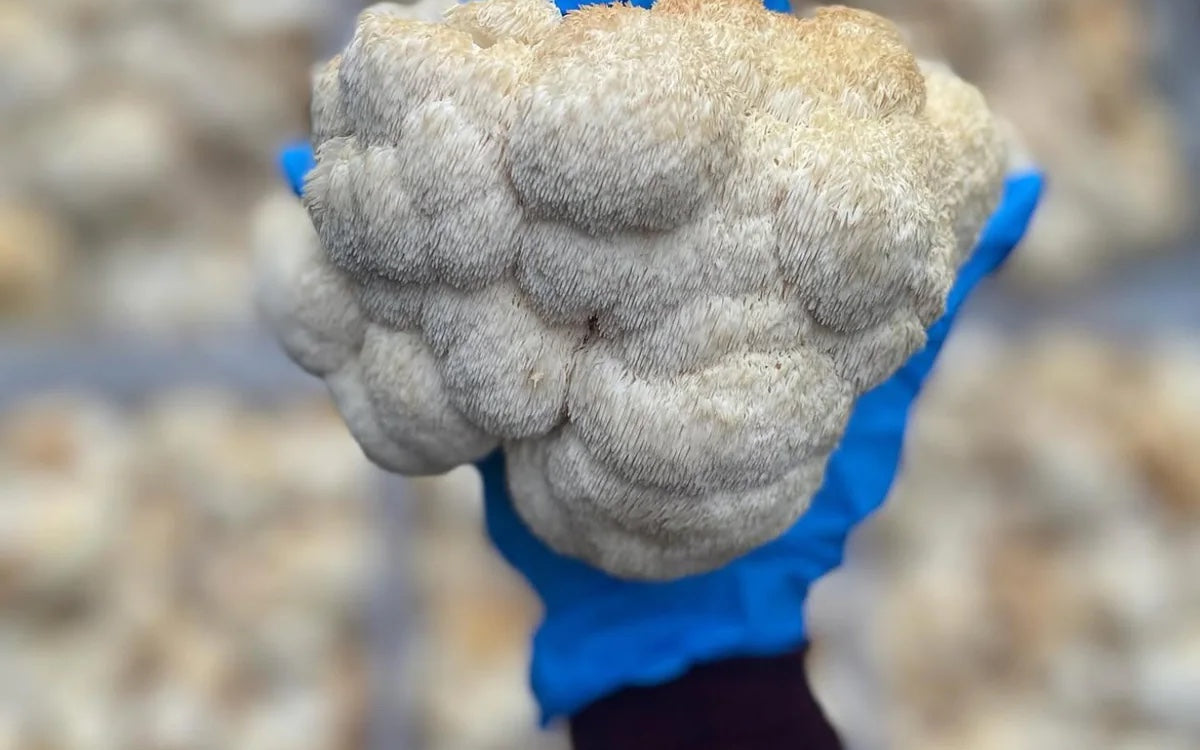
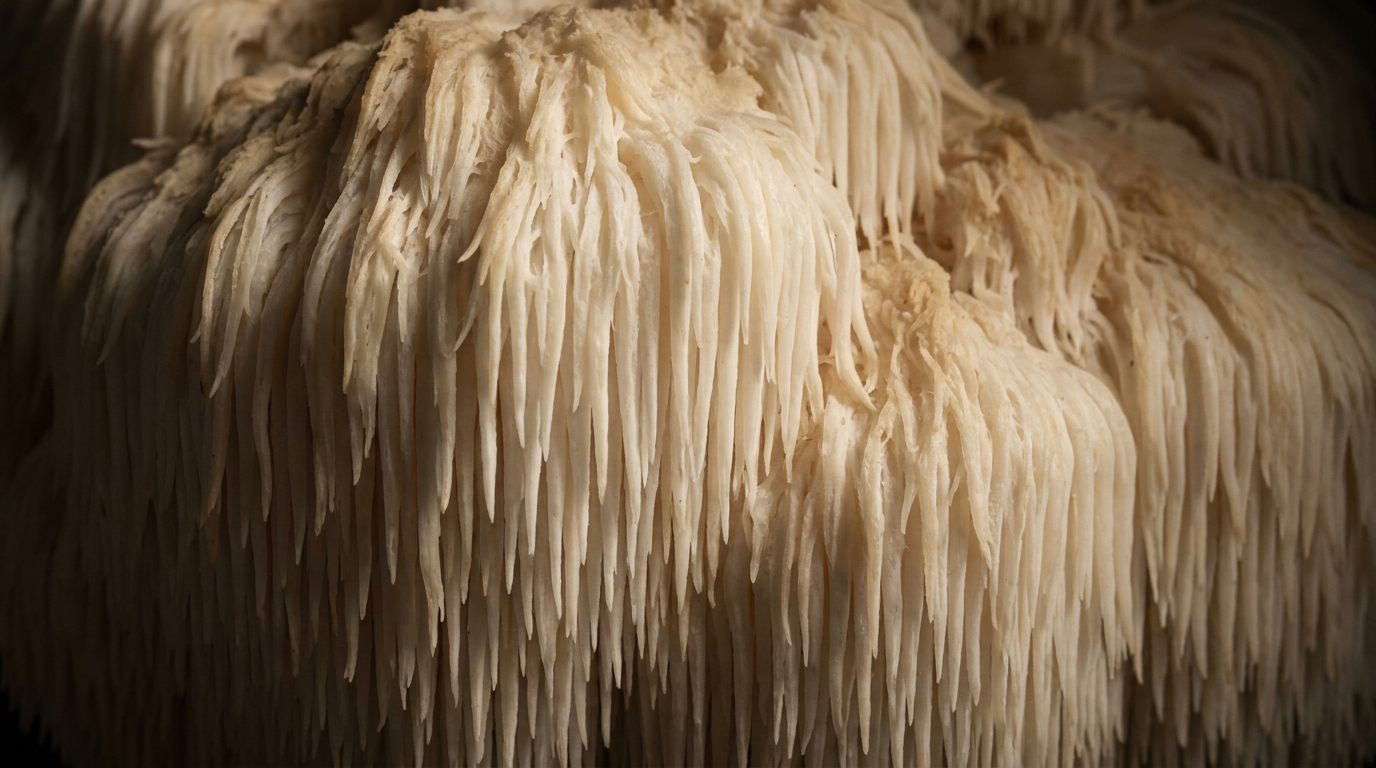
One of the most important facts about hericenones is that they are primarily found within the fruiting body of Lion's Mane. The fruiting body is the visible mushroom itself. The cascading white structure resembles a lion's mane and gives the mushroom its name.
This matters because not all Lion's Mane supplements are produced from fruiting bodies. Some products utilise mycelium, the root-like fungal network that grows beneath the mushroom. While mycelium contains its own unique compounds, the concentration and profile of bioactive molecules differs significantly from the fruiting body.
Because hericenones are concentrated within the fruiting body, products made primarily from mycelium may contain lower levels of these compounds.
Hericenones vs Erinacines: What's the Difference?
One of the most common points of confusion in the Lion's Mane world is the difference between hericenones and erinacines. Both are naturally occurring compounds associated with Lion's Mane and both have attracted scientific interest because of their relationship with nerve growth factor and brain health.
Historically, researchers have associated hericenones primarily with the fruiting body of Lion's Mane and erinacines with the mushroom's mycelium. However, modern extraction techniques and analytical testing have revealed that the distinction is not always as simple as early research suggested.
What matters most is not whether a product contains hericenones or erinacines. It is whether the final extract contains meaningful levels of the bioactive compounds that make Lion's Mane unique. Both compound groups continue to be investigated for their potential role in supporting healthy brain function.
For consumers, the key takeaway is that the quality of the extract matters far more than focusing on a single compound in isolation. Lion's Mane contains a complex network of bioactive molecules that likely work together rather than independently.
What Is Nerve Growth Factor (NGF)?
To understand why hericenones attract so much attention, it's helpful to understand nerve growth factor. Nerve growth factor, often abbreviated as NGF, is a protein that plays an essential role in the growth, maintenance, and survival of neurons.
It helps support neuronal development, synaptic communication, learning processes, memory formation and neural repair mechanisms.
Scientists have been studying NGF for decades because of its importance in maintaining healthy nervous system function throughout life. As we age, maintaining healthy neuronal function becomes increasingly important. This has led researchers to explore compounds capable of influencing pathways associated with NGF production and activity.
This is where Lion's Mane entered the scientific spotlight. Early laboratory studies suggested that compounds within Lion's Mane, including hericenones, may influence pathways associated with NGF synthesis under experimental conditions.
While this does not mean Lion's Mane directly increases intelligence or creates new brain cells overnight, it provides a compelling biological mechanism that continues to attract research interest.
Beyond NGF: What About BDNF?
While much of the early Lion's Mane research focused on nerve growth factor (NGF), researchers are increasingly interested in another protein involved in brain health called brain-derived neurotrophic factor, or BDNF.
Like NGF, BDNF plays an important role in neuroplasticity, learning, memory, and the formation of new neural connections. BDNF is often described as a fertiliser for the brain because it helps support the growth and maintenance of neurons and synapses.
Emerging research suggests Lion's Mane may influence pathways associated with BDNF signalling, although this area remains under active investigation and requires further human research. Together, NGF and BDNF help explain why Lion's Mane has become one of the most studied mushrooms in cognitive health and healthy brain ageing.
Hericenones and Neuroplasticity
Neuroplasticity refers to the brain's ability to adapt, reorganise, and form new neural connections throughout life. Contrary to previous scientific beliefs, the adult brain is not fixed or static. Every new skill learned, memory formed, language acquired, or habit developed involves some degree of neuroplastic change.
Researchers are increasingly interested in factors that may support healthy neuroplasticity because of its role in learning, memory, focus, cognitive resilience and healthy ageing.
Because NGF and BDNF both play important roles in maintaining neuronal health, compounds capable of influencing these pathways have become a major area of scientific interest. Hericenones are among the most widely discussed of these compounds within the functional mushroom category.
This connection between Lion's Mane, neurotrophic factors, and neuroplasticity is one of the primary reasons the mushroom has become popular among students, entrepreneurs, knowledge workers, and longevity-focused consumers.
What Does the Research Actually Say?
The majority of research investigating hericenones has been conducted in laboratory and animal models. These studies have produced intriguing findings regarding NGF synthesis, neuronal growth, and neuroprotective mechanisms.
However, it is important to distinguish between mechanistic studies and proven human outcomes. While human studies involving Lion's Mane have reported promising results related to cognitive function, mood, and memory, researchers cannot yet attribute these outcomes solely to hericenones.
Lion's Mane contains numerous bioactive compounds, making it difficult to isolate the contribution of any single molecule. The current evidence is best viewed as encouraging rather than conclusive. Researchers continue to investigate how hericenones, erinacines, and other Lion's Mane compounds contribute to the mushroom's overall effects.
Why Extraction Matters
Hericenones are not simply released because a mushroom has been dried and ground into powder. Like many mushroom compounds, they exist within a complex biological structure protected by chitin-rich cell walls. Extraction helps release these compounds from the mushroom matrix, and different extraction methods target different classes of compounds.
This is why Superoom uses triple ultrasonic extraction. Combining water, alcohol and ultrasonic extraction creates a broader-spectrum extract capable of delivering a wider range of beneficial compounds. Without effective extraction, a substantial proportion of beneficial compounds may remain inaccessible.
Why Fruiting Body Sourcing Matters
If hericenones are predominantly found within the fruiting body, then the quality of the fruiting body becomes critically important. Not all Lion's Mane products contain 100% fruiting body material. Some utilise mycelium biomass grown on grain substrates, which may contain lower levels of the compounds consumers are actively seeking.
For consumers interested in hericenones specifically, fruiting body sourcing should be one of the first questions asked when evaluating a supplement.
At Superoom, we use 100% fruiting body Lion's Mane sourced from Finland and extracted using dual extraction and ultrasonic extraction technology. Independent analysis identified both hericenones and erinacines alongside other naturally occurring bioactive compounds. This reflects our focus on comprehensive extraction and compound verification rather than optimising for a single marker compound.
This approach is designed to maximise access to the full spectrum of naturally occurring compounds that make Lion's Mane one of the most studied mushrooms in modern neuroscience.
Key Takeaways
- Hericenones are bioactive compounds found primarily in Lion's Mane fruiting bodies.
- They are studied for their relationship with nerve growth factor (NGF).
- NGF plays an important role in neuronal growth, maintenance, and communication.
- BDNF is another important neurotrophic factor involved in learning, memory, and neuroplasticity.
- Both hericenones and erinacines continue to be investigated for their potential role in brain health.
- Effective extraction helps release bioactive compounds from the mushroom matrix.
- Fruiting body sourcing and compound verification play a critical role in product quality.