
Lion's Mane Tincture UK: How to Find a Real Fruiting-Body Extract Under £40
You have decided to try lion's mane. Maybe a friend swears by it in her morning coffee, or you have read about hericenones and the brain. So you search for a lion's mane tincture in the UK and find a wall of near-identical bottles, all promising focus and clarity, at prices that range from a few pounds to the cost of a good dinner.
Here is the thing most labels will not tell you. Two bottles that both say "lion's mane" can contain very different things. One holds an extract of the mushroom itself. The other may be mostly the grain it was grown on.
This guide shows you how to tell the difference, what to look for on a label, and how to get a genuine, clinical-grade fruiting-body extract for under £40 a month.
Fruiting Body vs Mycelium: The Difference That Matters Most
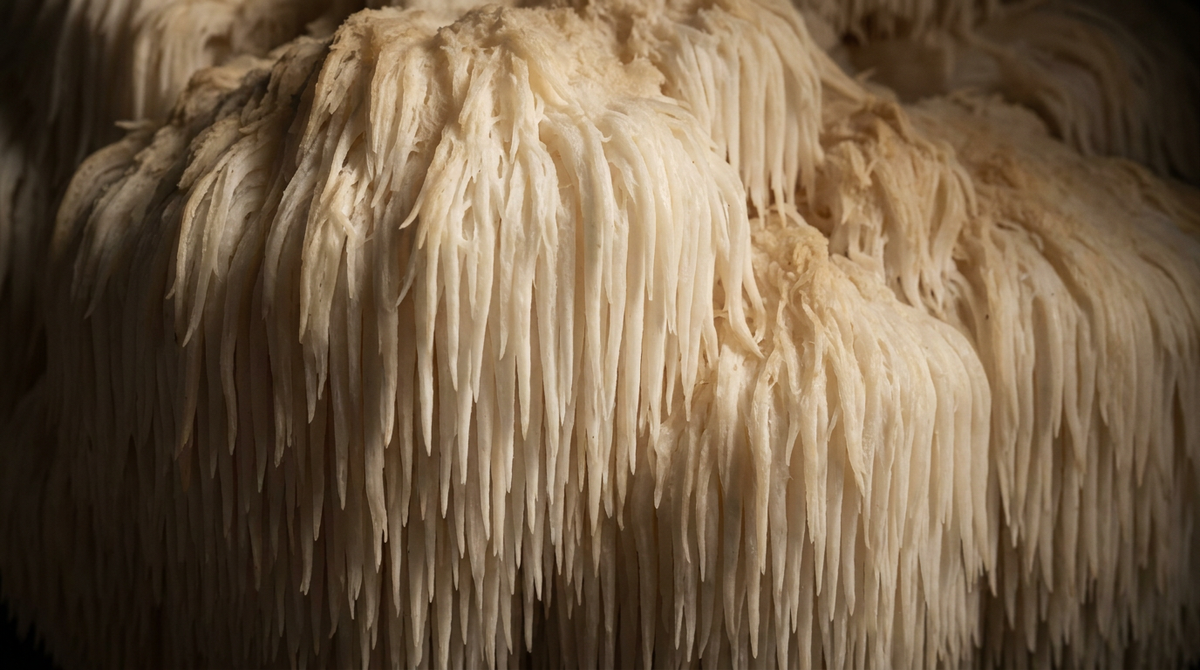
A mushroom has two main parts. The fruiting body is the mushroom you can see and pick: in lion's mane, the shaggy white cascade that grows on hardwood trees. The mycelium is the root-like network that spreads underground or through wood before the mushroom appears.
Many supplements are made from mycelium grown on rice, oats or other grain. The problem is that the mycelium cannot be separated from the grain it grows through, so the whole lot is dried and ground together. The result is a product that is largely starch.
The fruiting body is where the compounds lion's mane is known for are concentrated. Hericenones, the compounds researchers link to nerve growth factor (NGF), are found in the fruiting body. You can read more in our piece on what hericenones are and why they matter.
What the Lab Data Shows
Nammex, a specialist in mushroom testing, has published figures that make the difference very clear. Testing reishi, they compared a fruiting-body extract with mycelium grown on grain:
| Reishi sample | Beta-glucans | Alpha-glucans (starch) |
|---|---|---|
| Fruiting body | 30.5% | 0.37% |
| Mycelium on grain | 6.56% | 40.77% |
Across their wider testing, mycelium-on-grain products averaged about 6% beta-glucans, compared with about 35% in the mushrooms themselves. Nammex describes high starch as "an indicator of adulteration". You can read their full breakdown here.
Beta-glucans are the polysaccharides studied for supporting the immune system. Starch is simply filler. When you choose a fruiting-body extract, you are paying for the mushroom, not the grain. We go deeper in fruiting body vs mycelium: why the difference matters.
How to Read a Lion's Mane Label
A few minutes with the label tells you almost everything. Look for:
- The Latin name. Real lion's mane is Hericium erinaceus. If the species is not named, ask why.
- "100% fruiting body".
- A beta-glucan percentage. "Polysaccharides" alone is not enough, because some tests count starch as a polysaccharide. A named beta-glucan figure, ideally measured with the Megazyme method, is the one to trust.
- Batch lab testing. A good brand tests every batch for bioactive compounds and purity.
- Certified organic. Look for a certification body code, such as an EU organic code, rather than the word "natural".
- Where it was grown. A brand that knows its origin will tell you.
Is the Grain Ethanol a Filler?
No. If you see "natural grain ethanol" on a tincture label, that is the extraction medium, not a grain bulking agent. Alcohol and water together draw out a broader range of compounds than water alone, which is why liquid extracts are made this way. Superoom uses purified water and natural grain ethanol (22%), and a daily serving is two pipettes, so the amount of alcohol you take is very small.
Tincture vs Capsules
A liquid extract has already done the hard work of releasing the mushroom's compounds, so your body does not have to. Superoom's formulas have 92% bioavailability, one of the most effective forms available. You can add your drops to coffee, tea, a smoothie or water, hot or cold, or take them under the tongue for faster absorption and effect. Read more in mushroom liquid extracts vs capsules.
A Real Fruiting-Body Lion's Mane, Under £40
Superoom Lion's Mane passes every check above, and on subscription it costs £35.99 a month. That is 30 servings, a full month, at £1.20 a serving, and 20% less than the one-off price of £44.99.
- 100% fruiting body Hericium erinaceus, with no mycelium and no grain.
- Beta-glucans specified at a minimum of 18%, measured with the Megazyme method on the mushrooms we use. Our most recent published batch tested at 22%.
- Triple ultrasonic extraction to unlock the maximum bioactive compounds.
- EU and USDA certified organic (organic control code FI-EKO-201), grown in Finland, batch lab tested and third-party tested.
- Vegan, sugar-free, gluten-free and made to FSSC 22000 food safety standards.
Subscribers also get a free 15ml mini and our guide, The Art of the Drop. You can pause, skip or cancel any time.
Want to try before you commit? The 15ml mini holds 9 servings, and any two minis are £35, so you can pair Lion's Mane with a second formula.
How to Take It and What to Expect
Take two full pipettes a day, which is 1,000mg of fruiting body. Most people take Lion's Mane in the morning with coffee, before the work that needs their head. It dissolves completely and does not change the taste.
Customers tell us focus is the first thing they notice, usually inside a fortnight. Most notice the full difference in 4 to 6 weeks, with benefits compounding over time, and many of our neurodivergent customers feel it within the hour. Take a one-week break after every three months.
"For the first time in 10 years, I’ve been able to sit and read, and focus on tasks, and actually experience clear thinking, it's wild!" Lila M
Why Superoom Lion's Mane
We built Superoom because we wanted to know exactly what was in the bottle. Every Superoom formula is made from 100% fruiting bodies, grown in Finland using some of the cleanest air and water in the world, and extracted three times with ultrasound. It is 7× more potent, origin traceable and batch tested, and it comes with a 60-day money-back guarantee for new customers (see the terms). See every standard we hold ourselves to on The Superoom Standard.
If you want focus by day and calm by night, Focus & Calm pairs Lion's Mane with Reishi for £65.99, saving 27%.
Is It Right for You?
Superoom is not suitable for children, or during pregnancy or breastfeeding. If you take prescription medication, including blood thinners, immunosuppressants, diabetes medication, ADHD treatments or antidepressants, check with your GP or pharmacist first. Our formulas contain 22% natural grain ethanol.
Key Takeaways
- A genuine lion's mane tincture is made from the fruiting body, not mycelium grown on grain.
- Nammex testing found mycelium on grain can be around 40% starch, with a fraction of the beta-glucans.
- Check the label for Hericium erinaceus, "100% fruiting body", a beta-glucan percentage, batch testing, organic certification and origin.
- Grain ethanol in a tincture is the extraction medium, not a filler.
- Superoom Lion's Mane is £35.99 a month on subscription, with a free mini and The Art of the Drop guide.
Frequently Asked Questions
What is the best lion's mane tincture in the UK under £40?
Look for a 100% fruiting-body extract with a stated beta-glucan percentage, batch lab testing and organic certification. Superoom Lion's Mane meets all of these and costs £35.99 a month on subscription, which is 30 servings at £1.20 each.
How can I tell if lion's mane is fruiting body or mycelium?
The label should say "100% fruiting body" and name Hericium erinaceus. Terms like "myceliated grain", "full spectrum" or "mycelium biomass" point to mycelium, and a missing beta-glucan figure is another clue.
What beta-glucan percentage should lion's mane have?
A good fruiting-body extract will state a clear beta-glucan figure rather than "polysaccharides", which can include starch. Superoom Lion's Mane is specified at a minimum of 18% beta-glucans, measured with the Megazyme method.
How much lion's mane should I take a day?
Take two full pipettes of Superoom Lion's Mane a day, which is 1,000mg of fruiting body. Add it to coffee, tea or water, or take it under the tongue, and take a one-week break after every three months.
How long does lion's mane take to work?
Customers tell us focus is usually the first thing they notice, often inside a fortnight. Most notice the full difference in 4 to 6 weeks, and many neurodivergent customers feel it within the hour of their first dose.
Is lion's mane tincture better than capsules?
A liquid extract has already released the mushroom's compounds, and Superoom's formulas have 92% bioavailability. It is also easy to add to the coffee you already drink, which makes it simple to take every day.
Is it safe to buy lion's mane on Amazon?
Buy from the brand directly or from its official store, so you know the product is genuine and stored properly. Superoom is available at superoom.life and from the official Superoom store on Amazon UK.
Shop the formula: Superoom Lion's Mane for Mental Performance
Food supplements should not replace a varied, balanced diet and a healthy lifestyle.